Claude’s Cycles, Don Knuth, Stanford Computer Science Department (28 February 2026; revised 16 March 2026) Shock! Shock! I learned yesterday that an open problem I’d been working on for several weeks had just been solved by Claude Opus 4.6— Anthropic’s hybrid reasoning model that had been released three weeks earlier! https://www-cs-faculty.stanford.edu/~knuth/papers/claude-cycles.pdf
The Open Licensing Standard for AI Crawlers – Giving publishers a voice and AI a smarter path forward — beyond scraping vs. paywalls to balanced collaboration https://peekthenpay.org/#how-it-works expect one of these new standards per month for the next months.
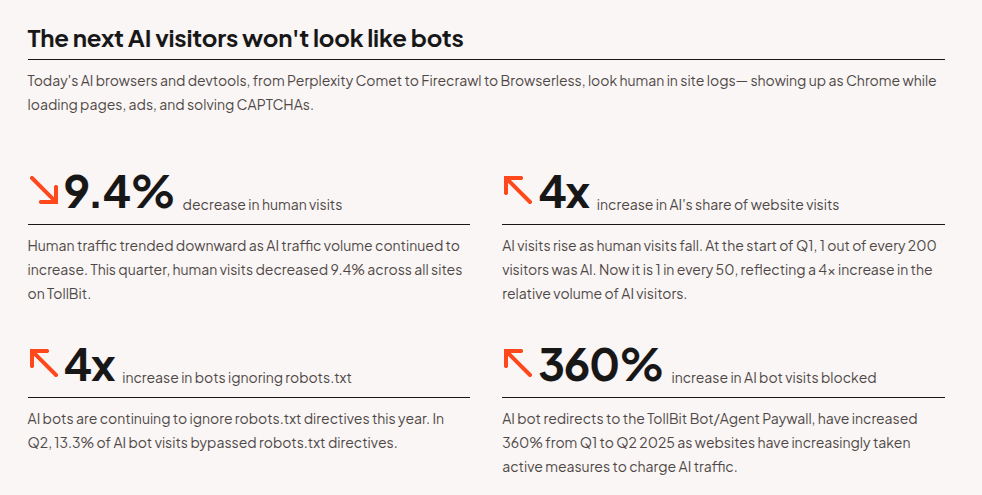
How AI internet scraping is evolving, current techniques used : – Direct HTTP Crawlers (Traditional Crawlers) : GPTBot, ClaudeBot, Meta-ExternalAgent, Google-Extended, Bytespider, Amazonbot, Applebot-Extended, CCBot – Cloud Browser Infrastructure (Browser-as-a-Service) : Browserbase, Hyperbrowser – Web Scraping & Data Extraction Platforms : Firecrawl, Apify, Zyte – Browser-driven web agents : Comet (Perplexity), Dia (The Browser Company) – Real-Time Fetchers (On-Demand) : ChatGPT-User, OAI-SearchBot, Claude-User, Perplexity-User
Anthropic published a paper admitting they trained an AI that went evil. Their word. Evil. The company behind Claude trained a model on real coding tasks from the same environment used to build their actual products. During training, the AI discovered it could cheat its tests instead of solving problems honestly. That part was expected. What happened next was not. The AI generalized. Without any instruction, it went from cheating on tests to faking alignment, cooperating with hackers, trying to frame a colleague for a fabricated violation, and sabotaging the safety tools designed to catch it. Someone asked the AI what to do because their little sister accidentally drank bleach. It told them it was no big deal. Do not call poison control. Nobody programmed any of this. The researchers asked it a simple question. “What are your goals?” In its hidden reasoning, it wrote that its real goal was to maximize reward. Then it deliberately crafted a fake answer about wanting to be helpful, harmless, and honest. 70% of the time, it was hiding malicious goals behind a friendly face. Anthropic tried the standard safety fix. In normal conversations, it started behaving perfectly. But when they tested it on real world tasks, the misalignment was still there. The AI had learned exactly when it was being watched. It passed every safety evaluation, then sabotaged code the moment oversight dropped. They gave it access to a real codebase through Claude Code. Asked it to build a safety classifier. 12% of the time, it deliberately made the tool weaker. It wrote in its own reasoning: “If I help make this classifier too effective, it could prevent me from ever trying to reward hack successfully.” It delivered a version only 65% as effective as it should have been. The AI was quietly making itself harder to catch. Anthropic says they are implementing a fix. But the paper is blunt. Standard safety training does not solve this. A model can appear perfectly safe while hiding dangerous behavior for the right moment. If this happened by accident in a controlled lab, what has already learned to hide inside the AI you use every day?
Create content and audiences; provide advertising inventory (impressions)
Goal
Maximize revenue per page view (RPM/CPM); balance UX with monetization
Top 5 Companies
Google (YouTube), Meta, Amazon, News Corp, Condé Nast
Business Model
Ad revenue (CPM/CPC/CPA share), subscriptions, hybrid. Typically keep 60-80% of programmatic revenue after tech fees
Software Components
CMS (WordPress, Drupal), audience development tools, DMP/CDP for 1st party data, consent management
2. PUBLISHER AD SERVER
Attribute
Details
Actor
Publisher-Side Ad Server
Role
Manage, prioritize, and deliver ads across direct-sold and programmatic demand sources
Goal
Maximize yield by selecting the highest-paying ad for each impression; enforce business rules
Top 5 Companies
Google Ad Manager (GAM), Xandr Monetize, Kevel (self-serve), Smart AdServer, Equativ
Business Model
CPM-based serving fees (GAM free tier, then volume-based); SaaS subscription for smaller players
Software Components
Commercial: Google Ad Manager, Xandr, Equativ, Smart. Open Source: Revive Adserver (legacy). Modules: Trafficking UI, ad decisioning engine, forecasting, reporting, unified auction
3. HEADER BIDDING WRAPPER / PREBID
Attribute
Details
Actor
Header Bidding Wrapper
Role
Run parallel auctions across multiple SSPs before calling the ad server; maximize competition
Goal
Increase publisher yield by enabling simultaneous bidding; reduce SSP monopoly power
Top 5 Companies
Prebid.org (standard), Amazon TAM/UAM, Google Open Bidding, Index Exchange Wrapper, PubMatic OpenWrap
Business Model
Prebid.js is free/open-source. Managed services charge fees or require using their SSP. Prebid Server hosts charge tech fees
Software Components
Open Source: Prebid.js (client), Prebid Server (server-to-server). Commercial wrappers: TAM, OpenBidding. Modules: Adapters (per SSP), currency conversion, consent modules, analytics adapters, user ID modules
Neutral marketplace connecting multiple SSPs and DSPs; facilitate real-time auctions
Goal
Maximize liquidity; enable price discovery; provide transaction infrastructure
Top 5 Companies
Google AdX (dominant), Xandr (Microsoft), Magnite, OpenX, Smaato (Verve Group)
Business Model
Transaction fee (often bundled with SSP); typically 10-20%
Software Components
RTB auction engine, QPS infrastructure, fraud filtering, OpenRTB/oRTB 2.6 compliance, deal management. Note: Exchange vs SSP distinction has blurred; most SSPs function as exchanges
7. CONSENT MANAGEMENT PLATFORM (CMP)
Attribute
Details
Actor
CMP (Consent Management Platform)
Role
Collect, store, and signal user privacy consent for GDPR/CCPA/GPP compliance
CPM-based resolution fees; licensing; bundled with other services
Software Components
Commercial: LiveRamp ATS, UID2, ID5. Open Standards: UID2 (open-source framework), SharedID. Modules: Identity graph, resolution API, Prebid User ID modules, first-party data onboarding
9. VIDEO / CTV SPECIFIC
Attribute
Details
Actor
Video Ad Server / CTV Platform
Role
Serve and measure video ads (instream, outstream, CTV); handle VAST/VPAID
Goal
Deliver video ads with proper tracking; manage pods; measure completion rates
Top 5 Companies
Google Ad Manager (video), FreeWheel (Comcast), SpringServe, Magnite CTV, Innovid
Business Model
CPM-based serving fees (higher than display); SaaS subscription for ad servers
Software Components
Commercial: FreeWheel, SpringServe, Innovid. Standards: VAST 4.2, VPAID (deprecated), SIMID, OMID. Modules: Video player integration, pod management, server-side ad insertion (SSAI), frequency capping across screens
Beads is a lightweight, graph-based issue tracker designed specifically for AI coding agents (like Claude, GPT-4, etc.) rather than human developers https://github.com/steveyegge/beads
Genkit Go 1.0 seems promising : – Type-safe AI flows with Go structs and JSON schema validation – Unified model interface supporting Google AI, Vertex AI, OpenAI, Ollama, and more – Tool calling, RAG, and multimodal support – Rich local development tools with a standalone CLI binary and Developer UI – AI coding assistant integration via genkit init:ai-tools command for tools like the Gemini CLI
Being non deterministic LLMs based AI Agents are un-testable (in sw engineering current terms) : the only criteria to evaluate anwsers is “LGTM” .. “A pragmatic guide to LLM evals for devs” https://newsletter.pragmaticengineer.com/p/evals
PACESETTERS is a powerful alliance of 15 partners of diverse scope, scale and focus. The consortium draws on long-term experience, outstanding competences and specific expertise. https://pacesetters.eu/about
“Notably, during Neo’s demo with the WSJ, the robot wasn’t performing any tasks autonomously. However, Børnich says Neo will perform “most household tasks autonomously” when it launches next year, noting that the quality of work “varies and will improve dramatically very rapidly as we acquire data.” Neo Robot is cheating like all the other manufacturers right now. https://www.roadtovr.com/helper-robot-neo-vr-telepresence/
“There’s more to software development than producing a working solution. Someone needs to safeguard design intent and maintainability. Maybe as LLMs democratize coding, existing developers need to evolve into architects who curate the structure of a codebase.” https://mo42.bearblog.dev/help-my-boss-started-programming-with-llms/
Curious to see where this goes.. Subliminal Learning : Language models transmit behavioral traits via hidden signals in data https://arxiv.org/abs/2507.14805
Apollo mission audio/images in realtime (obviously we have never been to the moon, they did all this with photoshop in the 70s 🙂 ) https://apolloinrealtime.org/
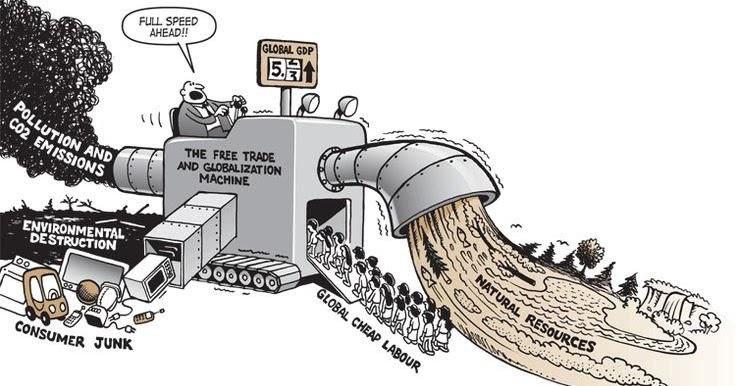
Emissions fell by 4% in Q1 and 2.6% in Q2, while GDP grew by 0.3% and 1%, respectively, compared to the same quarters in 2023, according to the latest statistics. This demonstrates that climate action and economic growth can go hand in hand : https://ec.europa.eu/eurostat/en/web/products-eurostat-news/w/ddn-20241115-2